Exercise for Seniors: 1 Simple Timing Trick for Bad Knees & Back (Home Workouts That Work)
Key Takeaways
- Reclaim Your Strength After 50: Why Smart Exercise Is Your Body's Best Ally
- Beginner Exercises at Home for Bad Knees
- Exercises for Lower Back Pain and Better Mobility

Here's the takeaway first: the right kind of exercise may protect your knees, ease lower back pain, and keep you steady on your feet — and you can start it today in your living room.
Ever wake up, stand up from the couch, and feel that little groan in your knees before your first coffee? You're not alone.
For older adults, regular physical activity is known to slow the muscle loss that speeds up after 50 — but only if you do it the right way, in the right order.
Your journey to feeling better starts here, right now. Stick with me to the end, because the one timing trick most people skip (it's later in this article) makes all the difference.
Contents
1. Reclaim Your Strength After 50: Why Smart Exercise Is Your Body's Best Ally
✅ Key points
- Muscle declines yearly
- Strength slows loss
- Twice weekly helps
- Muscle prevents falls
Here is what nobody tells you at your annual checkup: after 50, your body quietly sheds roughly 1-2% of muscle mass every single year.
That slow drain is exactly what steals your balance, your confidence on stairs, and your ability to catch yourself before a stumble turns into a fall.
But muscle is not just about lifting grocery bags — it is your body's brake system, the hidden force that keeps older adults upright and independent. The empowering truth for senior health?
Strength training just twice a week is well-supported by research as a way to slow — and sometimes partly rebuild — that loss.
Most people pour all their effort into walking or cycling, which is wonderful, but here is the twist that changes everything: cardio alone won't do it.
Photo: Unsplash / Elena Kloppenburg

Exercise that challenges your muscles directly is the non-negotiable piece most older adults are missing. Pick one lower-body move and try it tonight.
Your future self will feel the difference.
2. Beginner Exercises at Home for Bad Knees
✅ Key points
- Chair sit-to-stands
- Seated leg raises
- Strong quads protect knees
- Low-impact is key
If sore knees have convinced you that exercise is off the table, here is the real story: the smartest move for older adults with bad knees is low-impact strength work that loads the muscle without hammering the joint.
Two beginner exercises at home rise to the top of that list.
First, sit-to-stands from a sturdy chair — aim for 8-10 slow, controlled repetitions with a rest between sets.
Second, straight-leg raises while seated, which powerfully fortify the thigh muscle cradling your kneecap.

Photo: Pexels / Ivan S
Why does this matter so much for senior health? Stronger quads act like built-in shock absorbers, pulling pressure away from the joint surface with every step you take.
Now for the myth worth dropping: 'sore knees mean stop moving.'
Gentle, controlled movement generally serves older adults far better than total rest — though always check with your doctor first if there is swelling or sharp pain.
Challenge for today: complete two rounds of sit-to-stands before dinner and notice how your knees feel an hour later.
3. Exercises for Lower Back Pain and Better Mobility
✅ Key points
- Pelvic tilts help
- Bird-dog for core
- Hold 20-30 seconds
- Core braces spine
Imagine waking up without that familiar morning ache gripping your lower back.
That future is closer than you think — and the hidden key is not endless bed rest, which research consistently shows makes things worse.
The most effective starting point for lower back pain in older adults is gentle core and hip work done consistently.
Pelvic tilts, the 'bird-dog' move (reaching opposite arm and leg while on all fours), and knee-to-chest stretches are proven to ease stiffness and support the spine in ways that exercise alone achieves.
Photo: Unsplash / Nicholas Martinelli

The mechanism is beautifully simple: a stronger core acts like a natural back brace, so your spine stops doing all the heavy lifting on its own.
Hold each stretch for 20-30 seconds and breathe steadily through it — bouncing or jerking does more harm than good and is one of the top form mistakes older adults make.
Try this today: run through one slow round of pelvic tilts immediately after reading this and notice whether your lower back feels even slightly freer within the hour.
Helpful products
These items may be helpful in daily life; individual results may vary.
Exercise supplement on Amazon ›As an Amazon Associate, I earn from qualifying purchases.
4. Quick Morning Exercises to Start Your Day
✅ Key points
- 5-10 minute routine
- March in place
- Warm stiff joints
- Slow, gentle start
What if five to ten minutes before you even leave your bedroom could mean steadier movement, looser joints, and a calmer nervous system for the rest of the day?
That is exactly what a simple morning exercise sequence offers older adults, and the science behind it is straightforward.
Start with shoulder rolls, gentle marching in place, and slow ankle circles — movements so accessible they require nothing but the floor beside your bed. Why does timing matter so much for senior health?
After hours of stillness, joints are naturally stiffer and the fluid inside them thicker.
Easy movement warms that fluid like oil in an engine, restoring smooth motion before you demand real effort from your body.
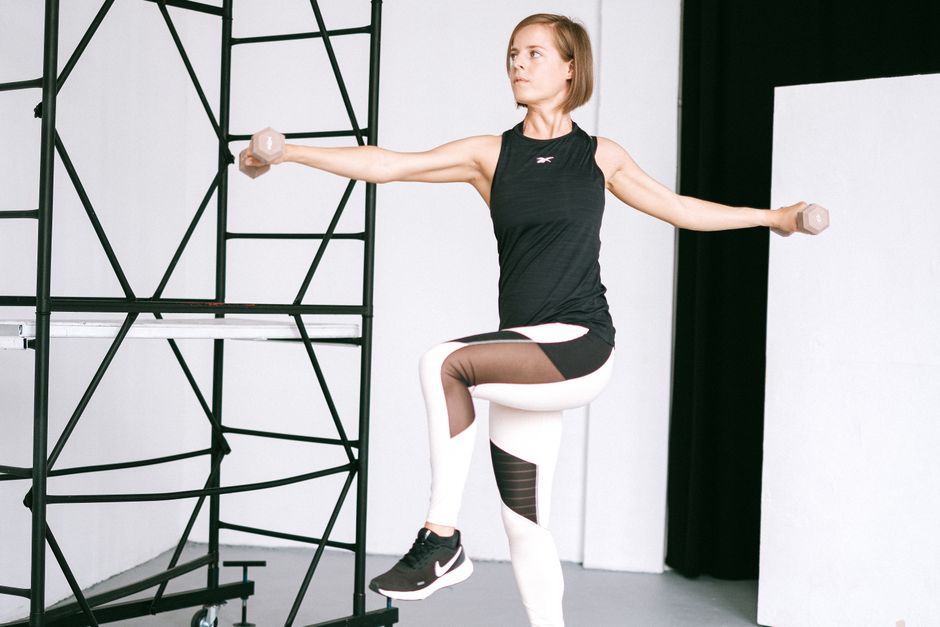
Photo: Pexels / Anna Shvets
The one trap to avoid: explosive stretches or fast movements the moment you wake up. Cold muscles want slow and gentle, not sudden force.
Pick one move from this list and do it tomorrow morning before coffee — that single small habit, repeated daily, compounds into meaningful results for older adults over weeks.
5. The Timing Trick Most People Skip: Walk After Meals
✅ Key points
- Walk after meals
- Within 30 minutes
- Blunts sugar spikes
- 10-15 minutes counts
Here is the habit that quietly separates older adults who feel energised after meals from those who feel sluggish: a 10-15 minute walk within 30 minutes of eating. This is not general exercise advice — the timing is the entire secret.
Gentle movement right after a meal pulls glucose into your working muscles at precisely the moment it is flooding your bloodstream, which may blunt blood sugar spikes in a way that the identical walk taken two hours later simply cannot match.
For senior health, this matters enormously, because steadier blood sugar means more consistent energy, fewer afternoon crashes, and long-term benefits that compound quietly over months.
Photo: Unsplash / VD Photography

The beautiful bonus: this tiny habit doubles as your daily cardio without ever feeling like a formal workout.
So instead of sinking into the sofa after dinner, loop once around the block — your legs, your energy levels, and your overall health as an older adult all benefit from that single, unhurried loop.
Try it tonight after your next meal and make it your new non-negotiable.
When to see a doctor
- Chest pain, pressure, or shortness of breath during activity
- Knee or joint swelling, redness, or warmth that won't settle
- Sudden dizziness, fainting, or loss of balance while moving
- Back pain that shoots down the leg or comes with numbness or weakness
Helpful products
These items may be helpful in daily life; individual results may vary.
Exercise for seniors on Amazon ›As an Amazon Associate, I earn from qualifying purchases.
Wrap-up
If you do one thing today, take a short walk within 30 minutes after your next meal — it's the easiest win with the biggest payoff.
Small, steady movement beats the occasional heroic effort every time, and your future self will thank you for starting now.
Summary: this guide shows seniors and older adults how safe, simple exercise — from beginner home workouts to knee-friendly moves and back-pain stretches — may build strength, ease pain, and boost daily energy, helping you move with more ease and confidence.
Talk with your doctor before starting anything new, then take that first gentle step.
If this guide helped you take a step toward easier movement, consider sharing it with a friend or family member who might also be looking for relief — your future self, and theirs, will thank you.
✅ Your checklist for today
☐ Do 8-10 chair sit-to-stands after breakfast
☐ Take a 10-15 minute walk within 30 min of a meal
☐ Hold 2 gentle back stretches for 20-30 seconds each
☐ Do 5 minutes of morning shoulder rolls and marching
☐ Add a protein source to every meal to feed muscle
Frequently asked questions
Q. How often should older adults exercise each week?
A. Most guidelines suggest about 150 minutes of moderate activity weekly, plus strength work on 2 days.
That can be split into short 10-15 minute chunks — it still counts. Start smaller if you're new and build up gradually.
Q. Is it safe to exercise with bad knees?
A. Often yes, with low-impact moves like chair squats, seated leg raises, and walking.
Strengthening the muscles around the joint may actually reduce pain over time. If you have swelling or sharp pain, check with your doctor before starting.
Q. Do I need home exercise equipment to get started?
A. No — a sturdy chair, a wall, and your own body weight cover most beginner routines.
A light resistance band (usually inexpensive) is a nice add-on later for strength training at home. Start free, upgrade only if you enjoy it.
If this was helpful, please follow and share. Questions? Leave a comment below!
#exercise #fitness #workout #healthylifestyle #getmoving #dailyfitness #seniorhealth #olderadults
🔗 You may also like
• Seniors: Stop Wasting Money on Pills — How Seniors Should Choose Supplements (and 1 Timing Trick to Double Vitamin D Absorption)• Blood Sugar Management for Seniors: The Ignored Timing Trick That Flattens Spikes (and 4 More Habits)• Memory Slipping Lately? 5 Proven Ways Older Adults Sharpen It Fast🌐 ReyB Network
▶ Watch more senior-health videos on ReyB Health Lab YouTube.
🔗 All links & recommended products📚 Trusted sources to learn more
For more, see trusted sources such as the CDC and the Mayo Clinic.
📝 About this article
'ReyB Health Notes' explains trusted public health information in plain language for seniors. (Reviewed July 2026)
This article is general health information and is not a substitute for diagnosis or treatment. If you have symptoms or concerns, please consult a medical professional.
Comments
Post a Comment