Sleep Better After 50: What Actually Works — Morning Light, the Right Melatonin Dose, and Breathing Tricks That Help
Sleep Better After 50: What Actually Works — Morning Light, the Right Melatonin Dose, and Breathing Tricks That Help
Key Takeaways
- The Real Reason You're Not Sleeping Like You Used To
- The One Natural Sleep Aid That May Actually Help (And the Popular Pill That Can Work Against You)
- Sleep Hygiene Tips Most Adults Miss

You're lying in bed at 11 p.m., phone on the nightstand, and sleep just won't come.
Sound familiar?
If you're over 50 and wondering why you can't sleep the way you used to, you're not alone and here's the good news: it's not simply "aging." There are real, fixable reasons behind the sleep problems that quietly pile up over the years.
This article breaks down what actually helps, with specific numbers, timing strategies, and one surprising technique most people have never heard of. Keep reading to the end — the best tip is saved for last.
Contents
- The Real Reason You're Not Sleeping Like You Used To
- The One Natural Sleep Aid That May Actually Help (And the Popular Pill That Can Work Against You)
- Sleep Hygiene Tips Most Adults Miss
- Sleep Apnea in Women: Symptoms That Are Often Missed for Years
- How to Fall Asleep Faster When Anxiety Keeps You Awake
- Your Action Plan: Small Steps That Add Up to Real Rest
1. The Real Reason You're Not Sleeping Like You Used To
✅ Key points
- Clock shifts with age
- Morning light resets rhythm
- Not just 'getting old'
Wide awake at 4 a.m. no matter how early you went to bed?
You're far from alone — and the cause is more specific than "getting older." As we age, the body's internal clock shifts earlier, a pattern sometimes called a circadian rhythm disruption.
It means you feel genuinely sleepy at 9 p.m., then find yourself wide awake before dawn with no way back to sleep.
The main driver is reduced light sensitivity in aging eyes: your brain receives a weaker "daylight signal," so it triggers melatonin release too early in the evening and burns through it before morning arrives.
The fix most people never try: step outside for 30 minutes of bright natural light before 10 a.m.
Photo: Unsplash / Erik-Jan Leusink

That morning light exposure tells your brain the day has truly started, helping reset your sleep timing more reliably than supplements alone.
Pair this with consistent wake times — even on weekends — and many adults over 60 notice a meaningful improvement within two weeks.
If your sleep schedule feels locked in the wrong direction, this single habit is the most evidence-backed place to start.

2. The One Natural Sleep Aid That May Actually Help (And the Popular Pill That Can Work Against You)
✅ Key points
- Low-dose melatonin works
- Magnesium at bedtime
- Skip the warm milk
Here's something most sleep articles won't tell you: the standard melatonin pill millions of adults reach for every night could actually be working against you.
Those 5–10 mg doses — the most common on store shelves — are far above what your body produces on its own, and research suggests they may disrupt your natural sleep cycle rather than support it.
For adults over 50, a dose of just 0.5 to 1 mg taken 60–90 minutes before bed may work considerably better, gently mimicking your body's own production for a smoother, more natural drift to sleep — without the groggy, heavy feeling many people mistakenly blame on "bad sleep" the next morning.
As a complement, magnesium glycinate (200–400 mg at night) is worth a conversation with your doctor: it supports muscle relaxation and may help reduce nighttime waking without next-day drowsiness.

Photo: Pexels / Tara Winstead
And warm milk? The tryptophan content is simply too low to make a real difference — a comforting ritual, perhaps, but not a reliable solution.
When discussing sleep aids and senior health with your doctor, bring up these specific doses; the difference between 1 mg and 10 mg is not minor.
3. Sleep Hygiene Tips Most Adults Miss
✅ Key points
- Finish dinner early
- Weighted pressure calms nerves
- Side-sleep opens airway
Forget the usual advice about bedroom temperature and screen time — the sleep hygiene habit with the biggest payoff for older adults is one almost no one mentions: meal timing.
Finishing dinner at least 3 hours before bed, and skipping even a light snack in the 90 minutes before sleep, can significantly reduce the nighttime waking caused by digestion and blood sugar fluctuations.
Beyond that, a few other overlooked strategies are worth trying.
A weighted blanket or a weighted sleep mask applies firm, gentle pressure that calms the nervous system through a mechanism called deep pressure stimulation — it sounds simple, but the effect is real for many people.
Photo: Unsplash / Jopeel Quimpo

If you use earbuds to block out noise at night (some are designed specifically for side sleepers), keep the volume under 60 dB to protect your long-term hearing; a noise-blocking fit matters more than volume anyway.
Finally, check your sleep position: sleeping on your side keeps the airway more open and is consistently recommended for anyone who snores or suspects breathing disruptions during the night.
Small adjustments — but the cumulative effect on sleep quality can be surprisingly large.
Helpful products
These items may be helpful in daily life; individual results may vary.
Sleep supplement on Amazon ›As an Amazon Associate, I earn from qualifying purchases.
4. Sleep Apnea in Women: Symptoms That Are Often Missed for Years
✅ Key points
- Women's apnea is subtle
- Morning headache = clue
- Post-menopause risk rises
Waking up exhausted after a full night in bed, dealing with morning headaches that lift by mid-morning, or struggling with mood swings and brain fog during the day — these are the real sleep apnea symptoms in women, and they look almost nothing like the loud-snoring, gasping stereotype most people picture.
That mismatch is exactly why sleep apnea in women over 50 goes undiagnosed for years, sometimes decades.
After menopause, the risk rises sharply: progesterone, which helps keep airway muscles toned during sleep, drops significantly, leaving the airway more vulnerable to collapse.
If you regularly wake up tired with no clear explanation — especially if someone you share a bed with has noticed any unusual breathing — bring it up directly with a sleep specialist.
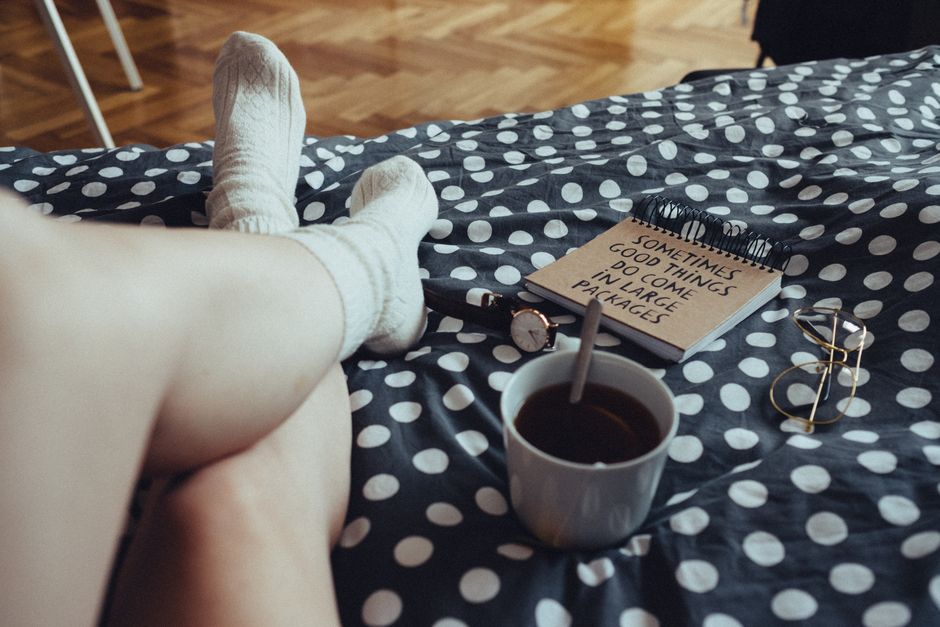
Photo: Pexels / freestocks.org
This is not a minor quality-of-life issue: untreated sleep apnea has documented links to elevated blood pressure, cardiovascular strain, and cognitive changes over time.
A sleep study is straightforward to arrange, and for senior health broadly, few evaluations offer a greater potential return.
Don't wait for the snoring stereotype to appear before asking the question.
5. How to Fall Asleep Faster When Anxiety Keeps You Awake
✅ Key points
- 4-7-8 breathing works
- Long exhale slows heart
- Cognitive shuffle stops racing
Still staring at the ceiling at midnight, heart racing, mind refusing to quiet down?
Here is a tool that consistently helps with falling asleep when anxiety takes over and it is backed by solid evidence: the 4-7-8 breathing technique.
Inhale for 4 seconds, hold for 7, exhale slowly for 8. That's it.
This simple rhythm activates your parasympathetic nervous system — your body's own "rest and calm" mode — in minutes, not hours.
The reason it works is mechanical, not mystical: that long, controlled exhale physically slows your heart rate, signaling to your whole body that the threat has passed and it is safe to sleep.
Photo: Unsplash / Priscilla Du Preez 🇨🇦

Many older adults who once spent hours chasing sleep have made this their nightly habit — and most notice a difference within the first few tries.
Pair it with a consistent wind-down routine starting 45 minutes before bed: dim the lights, step away from any screen, and do something low-stimulation like light reading.
And here is the technique almost nobody talks about — cognitive shuffle.
Picture a slow, random sequence of completely unrelated images: a red sock, a lighthouse, a ripe banana.
This gentle mental wandering actively breaks the anxious thought loop that keeps your mind racing, giving your brain a soft, harmless place to land instead of spiraling.
Sleep and senior health experts increasingly point to this combination — 4-7-8 breathing paired with cognitive shuffle — as one of the most practical, drug-free strategies available for older adults today.
6. Your Action Plan: Small Steps That Add Up to Real Rest
Sleep does not have to be a nightly battle. Whether you are new to sleep strategies or have tried everything without lasting results, the steps above are designed specifically with senior health in mind — straightforward, gentle, and effective without medication.
Start small tonight: set a 45-minute wind-down window, try one round of 4-7-8 breathing, and experiment with cognitive shuffle if your mind still races. Track how you feel in the morning for one week.
Small, consistent steps are what separate restless nights from genuinely restorative sleep. You deserve rest that actually works — and now you have the tools to get it.
When to see a doctor
- You wake up tired every single morning despite 7–8 hours in bed — possible sleep apnea or circadian rhythm disorder
- You stop breathing, gasp, or are told you snore loudly and frequently
- You experience sleep paralysis — feeling unable to move when falling asleep or waking — more than occasionally
- Insomnia has lasted more than 3 weeks and is affecting your mood, memory, or daily function
Helpful products
These items may be helpful in daily life; individual results may vary.
Sleep for seniors on Amazon ›As an Amazon Associate, I earn from qualifying purchases.
Wrap-up
Better sleep after 50 is genuinely within reach — and it rarely requires a complete overhaul of your life.
Small, specific changes (your melatonin dose, your dinner timing, 30 minutes of morning light) tend to add up faster than you'd expect.
Here's a quick recap: sleep changes with age for reasons you can address, the right natural sleep aids can help when used correctly, simple sleep hygiene habits make a real difference, and sleep apnea in women is frequently missed for years.
If you read this far, here's your one action for tonight: try the 4-7-8 breathing method for three full cycles before you reach for your phone, and track how you feel over the next week.
You might be surprised how quickly it helps. If this article was useful, share it with a friend who could use better sleep too.
This article is for general information only and is not a substitute for professional medical advice — if you are struggling with sleep regularly, a sleep specialist is always worth a visit.
✅ Your checklist for today
☐ Tonight: try the 4-7-8 breathing method for 3 cycles before closing your eyes
☐ Tomorrow morning: get 20–30 minutes of bright natural light before 10 a.m.
☐ Check your melatonin dose — switch to 0.5–1 mg if you're taking 5 mg or more (ask your doctor first)
☐ Move dinner 30 minutes earlier this week and note whether you sleep more soundly
☐ If you wake exhausted most mornings, write down your symptoms for one week and then call a sleep doctor near you
Frequently asked questions
Q. What's a realistic melatonin dosage for sleep for adults over 50?
A. Almost certainly not. This is one of the most persistent sleep myths around, but arachnologists and sleep researchers agree it's essentially fiction.
Spiders are sensitive to vibrations and would avoid a sleeping, breathing human.
The statistic was actually made up as an example of how easily people share false 'facts' online — so no, you're not eating spiders in your sleep.
Q. Can a sleep number mattress or a weighted sleep mask actually make a difference?
A. Most sleep specialists suggest starting as low as 0.5 mg to 1 mg, taken 60–90 minutes before your target bedtime.
Higher doses (the common 5–10 mg pills at the drugstore) may actually disrupt your sleep architecture over time.
Always loop in your doctor before starting, especially if you take blood pressure medications or blood thinners.
Q. Do noise-blocking earbuds like the Soundcore Sleep A20 by Anker really help you sleep?
A. They can — for the right person. A mattress with adjustable firmness may reduce pressure-point waking for people with joint pain, which is genuinely common after 50.
A weighted sleep mask (like a nodpod-style mask) adds gentle pressure around the eyes and may help block light while calming the nervous system — a reasonable, low-risk addition to your sleep routine.
Neither is a cure, but both address real physical discomforts that fragment sleep.
If this was helpful, please follow and share. Questions? Leave a comment below!
#sleephealth #insomniarelief #bettersleep #sleeptips #goodnight #sleepwell #seniorhealth #sleepafter50
🔗 You may also like
• Aching Knees and Stiff Hands After 50? The Surprising Joint Pain Relief That Actually Works• Healthy Diet After 50: 5 Simple Rules That Actually Work (The Meal Order Trick Changes Everything)• Memory Slipping Lately? 5 Proven Ways Older Adults Sharpen It Fast🌐 ReyB Network
▶ Watch more senior-health videos on ReyB Health Lab YouTube.
🔗 All links & recommended products📚 Trusted sources to learn more
For more, see trusted sources such as the CDC and the Mayo Clinic.
📝 About this article
'ReyB Health Notes' explains trusted public health information in plain language for seniors. (Reviewed July 2026)
This article is general health information and is not a substitute for diagnosis or treatment. If you have symptoms or concerns, please consult a medical professional.
Comments
Post a Comment