Water Exercises for Joints: The Gentle Workout That Eases Stiff Knees and Hips
💡 Key Takeaways
- Water buoyancy greatly reduces joint pressure.
- Gentle water resistance strengthens muscles without impact.
- Swimming, aqua aerobics ease stiff joints safely.

You step off the city bus and feel that familiar ache settle into your knees as you climb the stairs to your apartment.
Maybe a brisk walk on the pavement leaves your hips sore the next morning, and you've started wondering if there's a kinder way to stay active.
Good news: water exercises for joints let you move freely while the water cushions every step.
Let's explore why so many older adults are trading hard sidewalks for the soothing support of a pool.
📑 Contents
1. Why Water Is So Gentle on Aching Joints
✅ Key points
- Water supports body weight.
- Less joint pain from buoyancy.
- Gentle resistance works muscles.
When you stand in water up to your chest, it supports much of your body weight, taking pressure off your knees, hips, and spine.
This 'buoyancy' means you can move with far less joint pain than you'd feel on land.
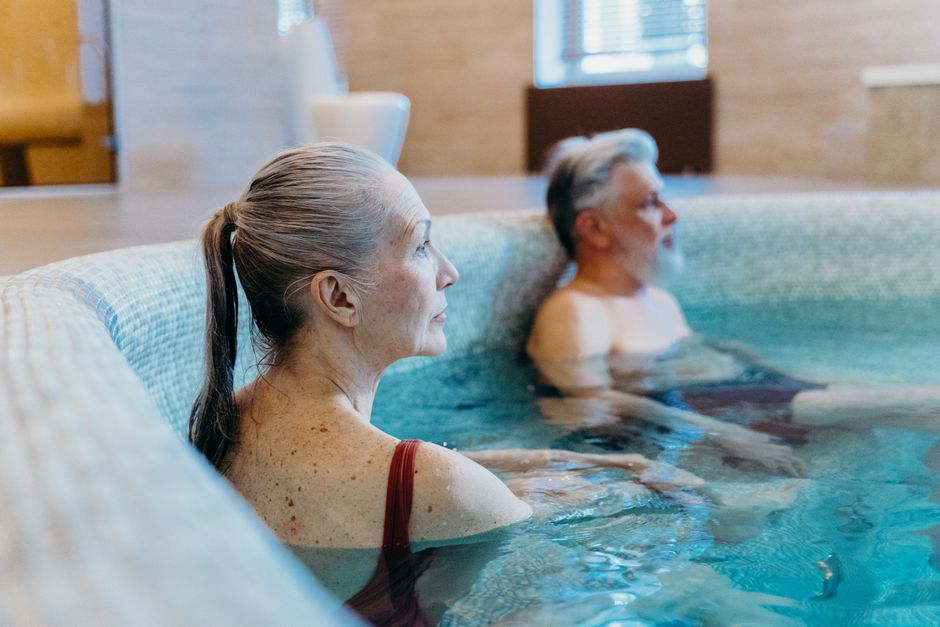
Photo: Pexels / cottonbro studio
The water also surrounds you with gentle resistance, so your muscles get a workout without any jarring impact.
For anyone with stiff or sore joints, this combination is hard to beat.
💡 Wear non-slip footwear around wet pool decks to prevent falls.
2. Swimming: A Full-Body, Low-Impact Classic
✅ Key points
- Swimming uses major muscle groups.
- Improves heart health, flexibility.
- Start with short laps, rest.
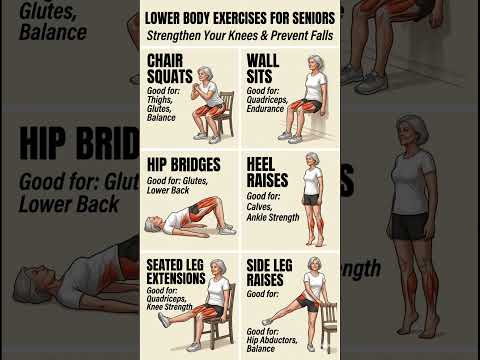
Swimming uses nearly every major muscle group while keeping your joints protected and cushioned.
Gentle strokes like the backstroke or breaststroke can improve heart health, flexibility, and stamina without pounding your knees.

Photo: Pexels / Andrea Piacquadio
If you haven't swum in years, start with short laps and rest as often as you need.
Even floating and slow paddling counts as meaningful movement.
3. Aqua Aerobics: Fun, Social, and Effective
✅ Key points
- Group sessions in shallow water.
- Meet people, lift mood.
- Easy to follow movements.
Aqua aerobics classes are group sessions done in shallow water, often set to music with an instructor guiding the moves.
They're a wonderful way to stay active while meeting people your own age, which can lift your mood as much as your fitness.
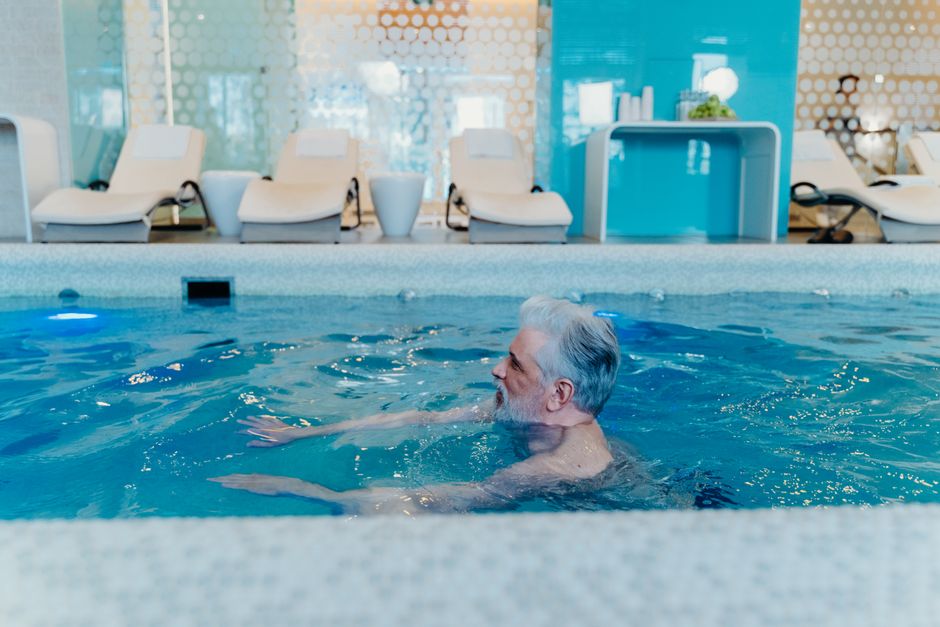
Photo: Pexels / cottonbro studio
Most movements—marching, leg lifts, gentle kicks—are easy to follow and can be adjusted to your comfort level.
Many community pools offer classes designed especially for seniors.
4. Simple Water Moves You Can Try Today
✅ Key points
- Standing exercises work wonders.
- Walk, lift knees, leg swings.
- Improve balance and strength.
You don't need to be a strong swimmer to benefit—standing exercises in the shallow end work wonders.
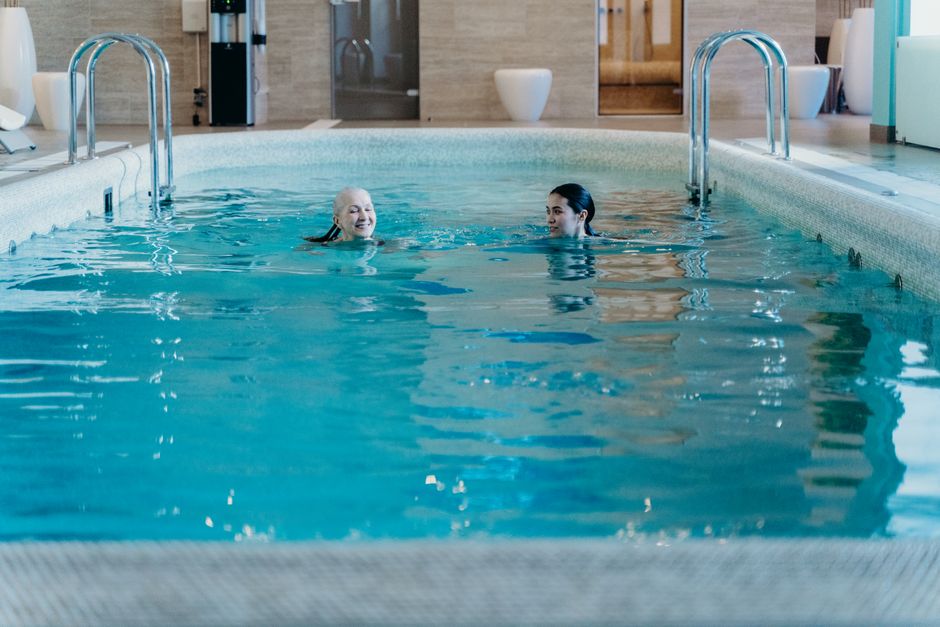
Photo: Pexels / cottonbro studio
Try walking across the pool, lifting your knees high, or doing slow leg swings while holding the pool edge.
Gentle arm circles and standing on one foot can improve balance and strength too.
Aim for slow, controlled movements rather than speed.
5. Staying Safe and Getting the Most From the Pool
✅ Key points
- Enter slowly, warm up.
- Stay hydrated always.
- Consult doctor if new.
Always enter the pool slowly and warm up with a few gentle movements before working harder.
Stay hydrated even though you're surrounded by water—you can still lose fluids while exercising.
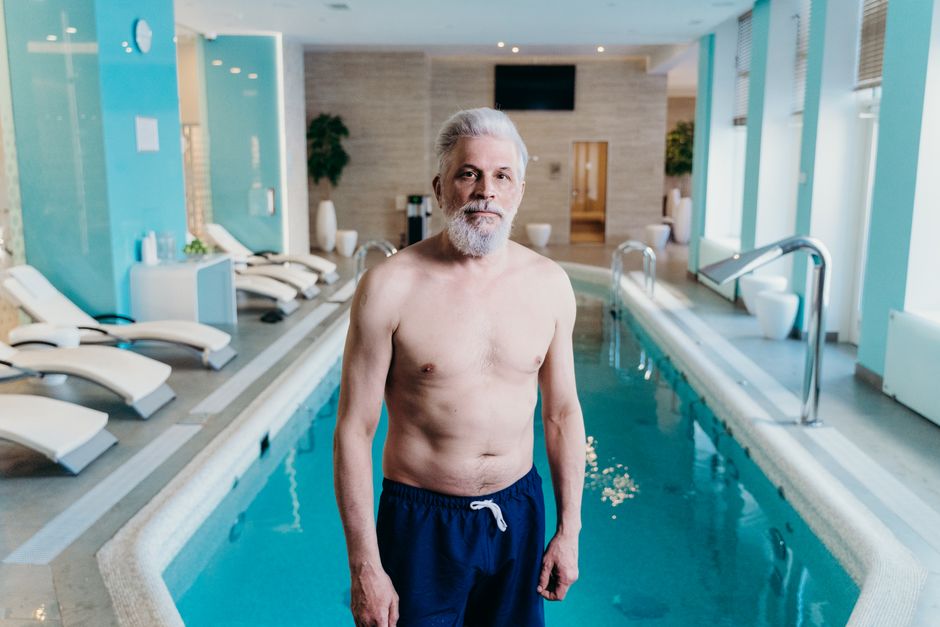
Photo: Pexels / cottonbro studio
Wear non-slip footwear around wet pool decks to prevent falls, and never push through sharp pain.
If you're new to exercise or have a health condition, talk with your doctor before starting.
When to see a doctor
- Sharp or sudden joint pain that worsens during or after exercise
- Swelling, redness, or warmth around a joint that doesn't go away
- Chest pain, dizziness, or shortness of breath while in the water
- Joint pain that limits your daily activities or disturbs your sleep
Wrap-up
Aching joints don't have to keep you from staying active and enjoying life.
The pool offers a welcoming, low-impact place to move, strengthen, and even make new friends—all while protecting the joints you depend on every day.
Start gently, listen to your body, and check with your doctor if you have any concerns.
Your knees and hips just might thank you.
✅ Your checklist for today
☐ Call a local pool and ask about senior swim or aqua classes
☐ Pack non-slip water shoes and a towel
☐ Do a 5-minute gentle warm-up before exercising
☐ Drink a glass of water before and after your session
☐ Note how your joints feel afterward to track progress
Frequently asked questions
Q. How often should I do water exercises for my joints?
A. Many older adults benefit from 2 to 3 sessions a week of 20 to 30 minutes, but the right amount depends on your fitness and health.
Start slowly and build up gradually.
Check with your doctor for guidance tailored to you.
Q. I can't swim well. Can I still benefit?
A. Absolutely.
Most joint-friendly water exercises are done standing in the shallow end, so swimming skills aren't required.
Walking, leg lifts, and gentle stretches in chest-deep water can ease joint pain and build strength safely.
Q. Will water exercise cure my arthritis or joint pain?
A. No exercise can cure arthritis, but regular water exercise may help reduce stiffness, improve mobility, and make daily movement more comfortable.
Think of it as a tool to manage symptoms, not a cure.
Always discuss your routine with your doctor.
If this was helpful, please follow and share . Questions? Leave a comment below!
Helpful products
These items may be helpful in daily life; individual results may vary.
Swim goggles on Amazon › Swim cap on Amazon › Aqua shoes on Amazon ›As an Amazon Associate, I earn from qualifying purchases.
#WaterExercise #JointHealth #SeniorFitness #AquaAerobics #LowImpactWorkout #JointPainRelief #HealthyAging #SwimForHealth
📚 Trusted sources to learn more
For more, see trusted sources such as the CDC and the Mayo Clinic.
📝 About this article
'ReyB Health Notes' explains trusted public health information in plain language for older adults (50s–70s). (Reviewed June 2026)
This article is general health information and is not a substitute for diagnosis or treatment. If you have symptoms or concerns, please consult a medical professional.
Comments
Post a Comment