Strength Training for Seniors: 5 Simple Moves to Rebuild Muscle After 60
💡 Key Takeaways
- Rebuild muscle, reduce falls with simple training.
- Gentle strength training works at any age.
- Consistent home workouts boost balance, independence.

You step off the city bus, grab the handrail, and notice your legs feel a little wobbly climbing the stairs to your apartment.
Carrying two bags of groceries up the block leaves you more winded than it used to. If this sounds familiar, you're not alone, and you're not broken.
The good news is that strength training for seniors can help you feel steadier, stronger, and more independent, often in just a few weeks of gentle, consistent effort right in your own living room.
📑 Contents
1. Why Muscle Loss Matters More Than You Think
✅ Key points
- Muscle loss starts at 50.
- Increases fall risk.
- Training rebuilds strength.
Starting around age 50, we naturally lose muscle each year, a process doctors call sarcopenia, or age-related muscle loss.
Less muscle means weaker legs, slower walking, and a higher chance of falls.
Photo: Unsplash / Centre for Ageing Better

The encouraging part is that muscle responds to gentle training at any age, even in your 70s and 80s.
Rebuilding even a little strength may help you stay active, climb stairs, and rise from a chair with confidence.
💡 Always check with your doctor before beginning a new routine.

2. Start With Your Legs: Your Foundation for Balance
✅ Key points
- Strong legs prevent falls.
- Do slow chair stands.
- Aim for 8-10 reps.
Strong legs are your best protection against falls and your ticket to staying independent.
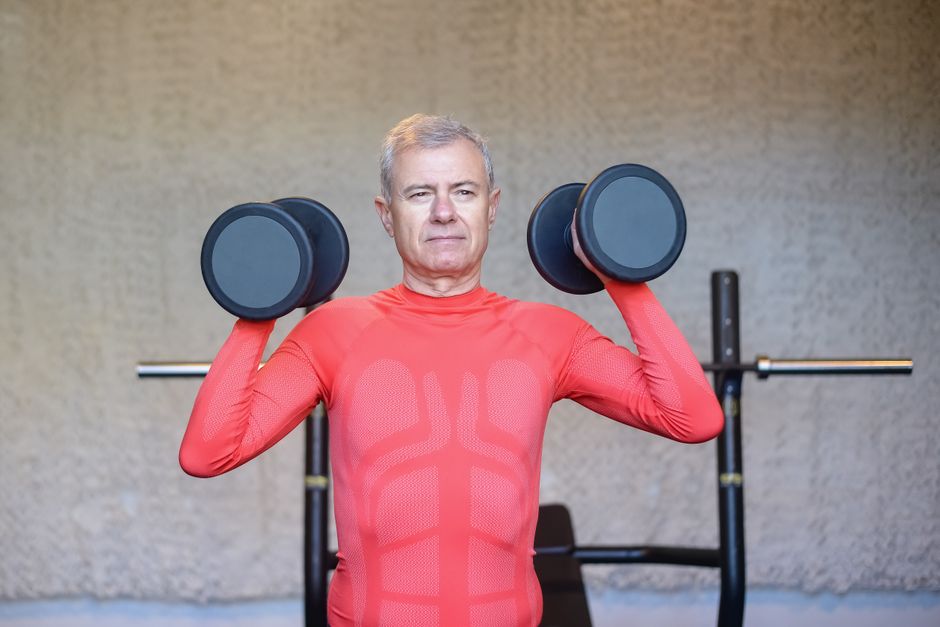
Photo: Pexels / Kampus Production
Try slow chair stands: sit on a sturdy chair, then stand up using your legs, not your hands, and lower back down gently.
Aim for 8 to 10 repetitions, resting as needed. Building leg strength may help you walk farther, get up from low seats, and feel more secure on city sidewalks and stairs.
3. Add Light Dumbbells for Upper-Body Strength
✅ Key points
- Use light dumbbells (1-3 lbs).
- Try bicep curls, overhead presses.
- Water bottles work too.
A pair of light dumbbells, even 1 to 3 pounds to start, can help your arms, shoulders, and grip.
Photo: Unsplash / VD Photography

Try slow bicep curls and gentle overhead presses while seated for extra stability. Stronger arms make everyday tasks easier, like lifting groceries or a grandchild.
If you don't own dumbbells, water bottles or canned goods work just fine as you begin.
4. Build a Safe Home Workout Routine
✅ Key points
- Workout at home.
- 2-3 sessions weekly.
- Always warm up first.
You don't need a gym to get stronger; a clear space in your living room is enough.
Aim for two to three sessions a week, with a rest day in between so muscles can recover.
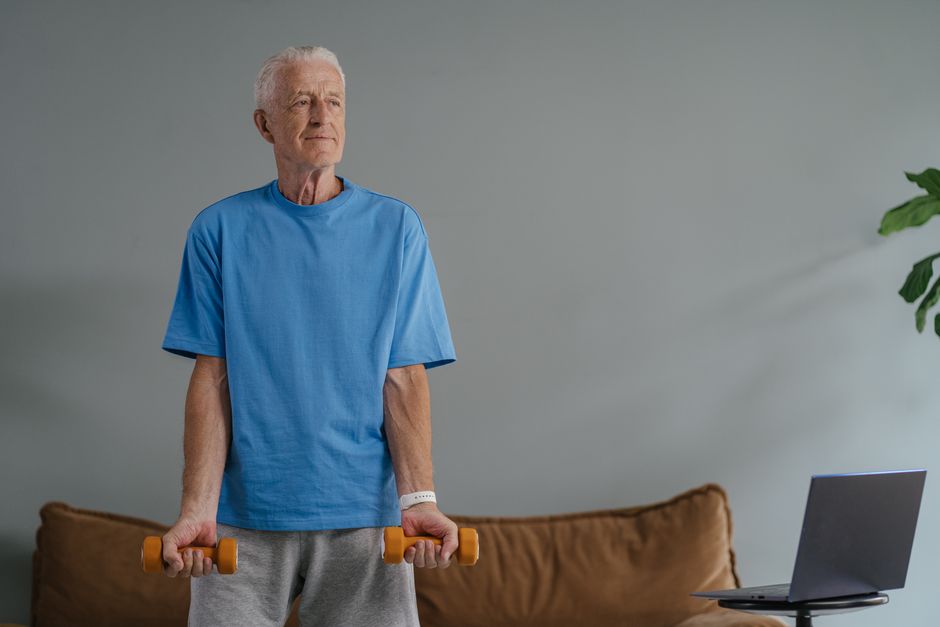
Photo: Pexels / SHVETS production
Always warm up with a few minutes of marching in place and arm circles.
Move slowly, breathe steadily, and stop if something feels sharp or painful.
5. Stay Consistent and Track Your Progress
✅ Key points
- Be consistent, not intense.
- Track reps in a notebook.
- Notice improved balance, energy.
Real strength comes from showing up regularly, not from pushing too hard one day.
Keep a simple notebook noting how many repetitions you did and how you felt afterward.
Photo: Unsplash / Giorgio Trovato

Celebrate small wins, like standing up more easily or carrying laundry without strain.
Over weeks, you may notice better balance, more energy, and steadier steps.
When to see a doctor
- Chest pain, dizziness, or shortness of breath during or after exercise
- Sharp or lasting joint pain that doesn't ease with rest
- Sudden swelling, numbness, or weakness in an arm or leg
- A fall, or repeated loss of balance while moving
Wrap-up
Getting stronger after 60 isn't about heavy gym sessions or impossible goals; it's about small, steady steps that add up.
A few minutes of chair stands and light dumbbell moves several times a week may help you stay independent, balanced, and confident in daily life.
Always check with your doctor before beginning a new routine, especially if you have health conditions.
Start small today, and let your future self thank you.
✅ Your checklist for today
☐ Do 8-10 slow chair stands today
☐ Warm up for 3 minutes before exercising
☐ Pick up light dumbbells or water bottles
☐ Schedule 2-3 workout days this week
☐ Write down today's reps in a notebook
Frequently asked questions
Q. Is strength training safe if I have arthritis or high blood pressure?
A. Often yes, with gentle, controlled movements, but it depends on your situation.
Talk with your doctor before starting, and avoid holding your breath while lifting, which can raise blood pressure.
Q. How long until I notice results?
A. Many people feel a little steadier and stronger within 4 to 6 weeks of regular practice.
Progress is gradual, so focus on showing up consistently rather than rushing.
Q. How heavy should my weights be?
A. Start light, with 1 to 3 pounds, and choose a weight you can lift slowly for 8 to 10 repetitions while keeping good form.
You can increase gradually as it begins to feel easy.
If this was helpful, please follow and share . Questions? Leave a comment below!
Helpful products
These items may be helpful in daily life; individual results may vary.
Light dumbbells on Amazon › Resistance bands on Amazon › Yoga mat on Amazon ›As an Amazon Associate, I earn from qualifying purchases.
#strengthtrainingforseniors #seniorfitness #musclehealth #homeworkout #legstrength #healthyaging #fallprevention #stayactive
📚 Trusted sources to learn more
For more, see trusted sources such as the CDC and the Mayo Clinic.
📝 About this article
'ReyB Health Notes' explains trusted public health information in plain language for older adults (50s–70s). (Reviewed June 2026)
This article is general health information and is not a substitute for diagnosis or treatment. If you have symptoms or concerns, please consult a medical professional.
Comments
Post a Comment