Osteoporosis & Bone Health: 5 Ways Seniors Keep Bones Strong
💡 Key Takeaways
- Get bone density test; osteoporosis is a silent thief.
- Combine calcium with vitamin D for absorption.
- Do weight-bearing exercise and fall-proof your home.

Noticed you seem a bit shorter than before?
Don't brush it off — it can be the first sign of osteoporosis.
Osteoporosis progresses painlessly, then shows up when a fall breaks a wrist, spine, or hip — a 'silent thief.'
Because one fracture can be slow to heal and badly hurt your health, the key is to prevent breaks before they happen.
Here are five non-obvious ways to prevent osteoporosis and keep bones strong.
📑 Contents
1. Osteoporosis signals 'lost height and a stooping back'
✅ Key points
- Height loss signals osteoporosis.
- Get a bone density test.
- T-score guides treatment.
Osteoporosis has almost no symptoms, so losing 4 cm (1.5 in) or more of height, or a gradually stooping back, can mean the spine has quietly compressed (a compression fracture).

Photo: Pexels / Radik 2707
So postmenopausal women and those 65+ should get a 'bone density test' to check their bones.
It's quick, and your result (T-score) guides the care or treatment you set with your doctor.
💡 Don't assume 'no symptoms' means safe — get a bone density test.
2. Without vitamin D, calcium is 'wasted'
✅ Key points
- Vitamin D absorbs calcium.
- Sun exposure boosts D.
- Spread calcium across meals.
If calcium is the building block of bone, vitamin D is the 'gatekeeper' that lets it into the body — without enough D, calcium isn't absorbed no matter how much you eat.

Photo: Pexels / cottonbro studio
Vitamin D is hard to get from food alone, so some sun on arms and legs 2–3 times a week for 15–20 minutes helps, and supplements are common when low.
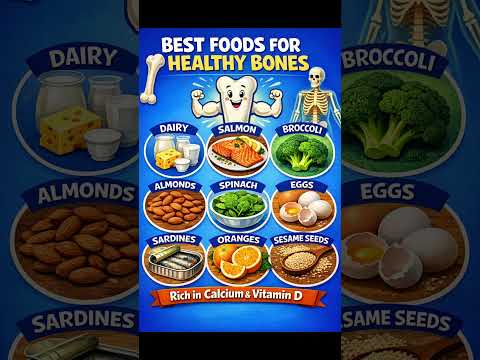
Get calcium from milk, tofu, small fish, and greens — but spread it across meals (under 500 mg at a time) for better absorption. Discuss supplement doses with your doctor.
3. Bone exercise is 'weight-bearing' (swimming is weak for bone)
✅ Key points
- Weight-bearing exercise builds bone.
- Swimming is weak for bones.
- Add balance to cut falls.
Bones strengthen when stressed, so weight-bearing activity — walking, light hiking, heel raises — builds bone.
Surprisingly, swimming and cycling are great for joints but don't load the bones much, so their 'bone' benefit is weak. Add balance moves like standing on one leg to cut fall risk.
If you already have osteoporosis, avoid deep forward bends or suddenly lifting heavy loads.
4. Coffee and salty food 'leach out calcium'
✅ Key points
- Limit coffee, salty food.
- Stop smoking, heavy drinking.
- Eat enough protein.
Even with good calcium intake, too much strong coffee or salty food drains calcium out through urine — a loss.
Smoking and heavy drinking also weaken bone, so cut back, and get enough protein (meat, fish, beans, eggs), the raw material of bone and muscle.
A very thin body may look fashionable, but extreme dieting starves bone, so balance is key.
5. With weak bones, a 'fall-proof home' is the medicine
✅ Key points
- Prevent falls at home.
- Clear tripping hazards.
- Install grab bars, night-lights.
For someone with weak bones, one fall can mean a hip fracture, then long bed rest and a steep decline — so 'not falling' matters most.
Clear tripping hazards like cords and thresholds, add a bathroom grab bar and non-slip mat, and wear low, non-slip shoes.
A small night-light from the bedroom to the bathroom prevents many night-time falls.
When to see a doctor
- Severe wrist or hip pain after a minor fall, with trouble moving (possible fracture)
- Sudden severe back pain without a clear injury (possible spine fracture)
- Noticeable height loss or an increasingly stooped back
- Pain after a fracture that won't settle and disrupts daily life
Wrap-up
Osteoporosis comes down to testing to know your bones, calcium + vitamin D, weight-bearing exercise, and not falling.
Don't assume 'no symptoms' means safe — get a bone density test, and see a doctor if you lose height or your back stoops.
✅ Your checklist for today
☐ Lost height or stooping? Get a bone density test
☐ Sun 2–3x/week + vitamin D
☐ Spread calcium across meals (under 500 mg)
☐ Weight-bearing exercise + one-leg balance
☐ Fall-proof the home (grab bars, night-light)
Frequently asked questions
Q. If I just take calcium supplements, am I protected from osteoporosis?
A. Calcium alone isn't enough. You need vitamin D to absorb it and weight-bearing exercise to stress the bone. Spread supplements across the day, not all at once.
Q. I swim a lot — that must be good for my bones, right?
A. Swimming is excellent for joints and heart, but it doesn't load the bones, so its bone benefit is weak. Add weight-bearing activity like walking for your bones.
Q. Do I have to take osteoporosis medication forever?
A. Duration and method differ by drug. Don't stop or change on your own — set the type and length with your doctor based on your bone-density trend.
If this was helpful, please follow and share . Questions? Leave a comment below!
Helpful products
These items may be helpful in daily life; individual results may vary.
Calcium magnesium vitamin d on Amazon › Stationary bike on Amazon › Non slip slippers on Amazon ›As an Amazon Associate, I earn from qualifying purchases.
#osteoporosis #bonehealth #bonedensity #calcium #vitamind #fractureprevention #seniorhealth #healthyaging
📚 Trusted sources to learn more
For more, see trusted sources such as the Bone Health & Osteoporosis Foundation and the NIH.
📝 About this article
'ReyB Health Notes' explains trusted public health information in plain language for older adults (50s–70s). (Reviewed June 2026)
This article is general health information and is not a substitute for diagnosis or treatment. If you have symptoms or concerns, please consult a medical professional.
Comments
Post a Comment