Indoor Exercises at Home for Seniors: Rainy-Day Wins
💡 Key Takeaways
- Indoor exercise boosts strength, balance, mood, reduces fall risk.
- No gym or special gear needed for effective home workouts.
- Consistent easy routines matter more than intense ones.

Here's the core takeaway: indoor exercises at home for seniors can keep your strength, balance, and mood steady even when you never leave the apartment.
Picture this — it's a gray, drizzly morning in the city, the bus is delayed, and your usual walk in the park is out.
Instead of parking yourself on the couch, you could get a real, body-warming workout in your living room in under 20 minutes.
Regular low-impact movement is known to help older adults maintain balance and reduce fall risk, and the good news is you don't need a gym, fancy gear, or even much space.
Let's get into the easy exercises for seniors to do at home that actually pull their weight.
📑 Contents
1. Marching in Place: Your Rainy-Day Cardio Starter
✅ Key points
- March 2-3 minutes to warm up.
- Lift knees safely, use counter for balance.
- Plant each foot for balance benefit.
Marching in place is the unsung hero of home workouts for the elderly — it warms up your heart, hips, and ankles without a single step out the door.
Aim for 2-3 minutes to start, lifting knees only as high as feels safe, and rest a hand on a sturdy counter if your balance feels shaky.
Photo: Unsplash / Age Cymru

Here's the why: lifting each knee forces your core and standing leg to stabilize, which quietly trains the same muscles that catch you when you trip.
Most people march too fast and too floppy — slow it down and really plant each foot for the balance benefit.
💡 Rest a hand on a sturdy counter if your balance feels shaky.

2. Chair Exercises for Seniors at Home: Strength Without Standing
✅ Key points
- Perform seated leg extensions.
- Hold leg for 2 seconds.
- Do 10 per leg.
If standing for long tires you out, chair exercises for seniors at home are a genuine workout, not a consolation prize.
Try seated leg extensions: sit tall, straighten one knee, hold for 2 seconds at the top, then lower slowly — that little hold is where the muscle actually grows.
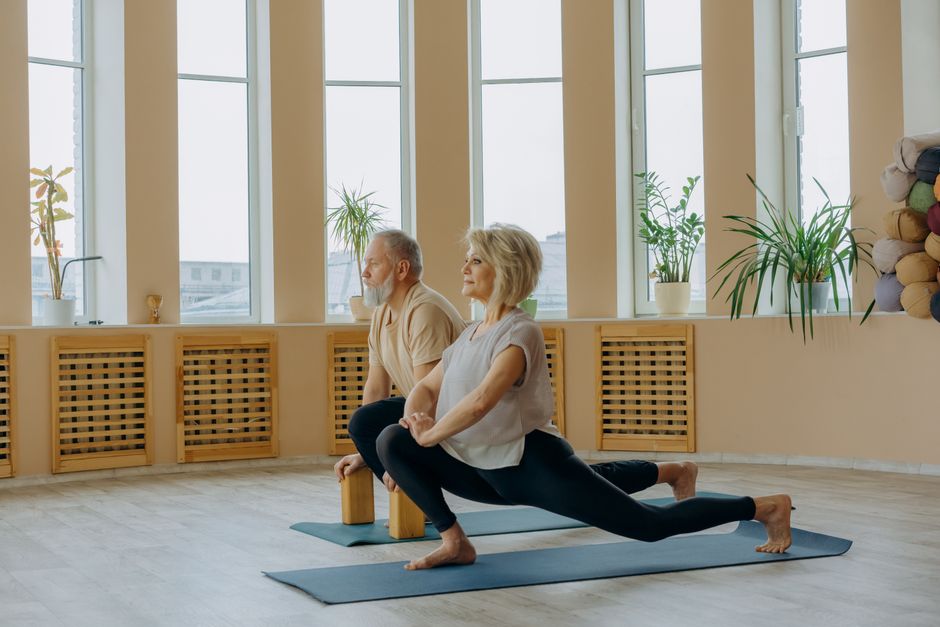
Photo: Pexels / Mikhail Nilov
Do 10 per leg, and add seated marches or arm circles to keep the heart rate gently up.
A common myth is that sitting down means you're 'cheating'; in truth, for home exercises for seniors with mobility issues, the chair removes fall risk so you can push the muscle harder.
3. Balance Moves to Stay Steady on Your Feet
✅ Key points
- Stand on one foot for 10 seconds.
- Lightly touch counter for support.
- Repeat daily for balance skill.
Exercises for seniors to improve balance are the ones that pay off most as we age, and you can practice them right beside your kitchen counter.
Stand on one foot for 10 seconds while lightly touching the counter, then switch — do this while waiting for the kettle and it becomes a habit, not a chore.
Photo: Unsplash / Vitaly Gariev

The reason it works: balance is a skill your brain re-learns through repetition, so short daily doses beat one long weekly session.
Ever notice how a quick stumble feels scarier than it used to? That's exactly the reflex this trains back.
4. Gentle Stretching for Flexibility and Stiff Joints
✅ Key points
- Stretch warm muscles only.
- Hold stretches 20-30 seconds.
- Avoid bouncing during stretches.
Low-impact stretching keeps you limber, and for exercises for seniors with arthritis, timing matters more than people think.
Stretch when your body is already warm — after marching or even after a warm shower — never on cold, stiff joints first thing out of bed.

Photo: Pexels / SHVETS production
Hold each stretch 20-30 seconds without bouncing; bouncing actually tightens the muscle's protective reflex and works against you.
Try gentle neck rolls, shoulder shrugs, and seated forward folds, breathing out as you ease deeper.
5. Putting It Together: A 15-Minute Routine That Sticks
✅ Key points
- Warm-up, strength, balance, then stretch.
- Aim for 3-4 sessions weekly.
- Consistency beats intensity.
Here's the order that makes a senior exercise routine flow: march to warm up, then chair strength, then balance, and finish with stretching while your muscles are warm.
Sequence isn't fussiness — warming up first protects your joints, and stretching last is when flexibility gains hold best.
Photo: Unsplash / Chua Zi Hui

Three or four times a week is plenty to start, and you can split it into two short blocks if 15 minutes feels long.
But here's what most people miss — consistency on the easy days matters more than intensity on the good ones.
When to see a doctor
- Chest pain, pressure, or unusual shortness of breath during or after exercise
- Dizziness, fainting, or a sudden loss of balance you can't explain
- Sharp or swelling joint pain that worsens with movement
- New or worsening leg swelling, numbness, or calf pain
Wrap-up
On the grayest, rainiest day, you've now got a plan: indoor exercises at home for seniors that build strength, balance, and flexibility in 15 minutes — no gym, no excuses.
Start small, keep it on the days you'd rather skip, and let your body remember how good steady feels.
Meta summary: Indoor exercises at home for seniors — easy marching, chair, balance, and stretching routines that may help strength and balance on rainy days.
✅ Your checklist for today
☐ March in place for 2-3 minutes to warm up
☐ Do 10 seated leg extensions per leg in a sturdy chair
☐ Practice one-foot standing for 10 seconds each side at the counter
☐ Stretch warm muscles, holding each for 20-30 seconds
☐ Pick 3-4 days this week and put them on the calendar
Frequently asked questions
Q. How often should seniors do indoor exercises at home?
A. For most older adults, 3-4 sessions of 15-20 minutes a week is a solid start.
You can split a session into two shorter blocks if that's easier.
Build up gradually, and check with your doctor before starting if you have heart, joint, or balance concerns.
Q. Are chair exercises really effective, or just for very frail people?
A. They're genuinely effective for almost everyone.
Sitting removes fall risk, which lets you focus on the muscle and even push a little harder.
Add slow holds at the top of each move to make them count.
Q. What if I have arthritis and my joints feel stiff?
A. Move within a comfortable range and stretch only after you're warmed up, never on cold joints.
Gentle, low-impact motion may help reduce stiffness over time.
If pain is sharp or a joint swells, pause and talk with your doctor.
If this was helpful, please follow and share . Questions? Leave a comment below!
Helpful products
These items may be helpful in daily life; individual results may vary.
Exercise bike on Amazon › Mini stepper on Amazon › Yoga mat on Amazon ›As an Amazon Associate, I earn from qualifying purchases.
#SeniorFitness #ExercisesForSeniors #HomeWorkoutForElderly #LowImpactExercises #SeniorHealthAndWellness #ChairExercises #BalanceTraining #RainyDayWorkout
📚 Trusted sources to learn more
For more, see trusted sources such as the CDC and the Mayo Clinic.
📝 About this article
'ReyB Health Notes' explains trusted public health information in plain language for older adults (50s–70s). (Reviewed June 2026)
This article is general health information and is not a substitute for diagnosis or treatment. If you have symptoms or concerns, please consult a medical professional.
Comments
Post a Comment