Foods That Lower Cholesterol: 5 Smart Picks After 50
💡 Key Takeaways
- Oats, beans, fish, nuts, olive oil lower cholesterol.
- Consistent daily eating for weeks moves cholesterol numbers.
- Swap bad fats; cutting back often moves numbers faster.

Here's the short version: a handful of everyday foods—oats, beans, nuts, and oily fish—may gently nudge your cholesterol in the right direction when you eat them consistently.
Picture this: you're standing in the cereal aisle of your city grocery store, squinting at labels, while your last blood test sits crumpled in your coat pocket with one number circled in red.
You don't need a miracle.
You need a few foods that lower cholesterol working quietly in your favor, day after day.
Soluble fiber and omega-3 fats are known to help, and the good news is they're cheaper and easier than most people assume.
📑 Contents
1. Oats and Beans: The Soluble Fiber That Acts Like a Sponge
✅ Key points
- Soluble fiber removes cholesterol.
- Aim 5-10 grams daily.
- Takes weeks to see movement.
Soluble fiber is the quiet hero here—it dissolves into a gel in your gut and grabs onto bile (which your body makes from cholesterol), then carries it out.
To replace that lost bile, your liver pulls cholesterol from your blood, and your LDL ('bad' cholesterol) can drift down.
Photo: Unsplash / Caroline Attwood

The magic number researchers often cite is around 5-10 grams of soluble fiber a day, roughly what's in a bowl of oatmeal plus a half-cup of beans.
Most people quit too soon—it takes a few weeks of daily eating, not a single hearty breakfast, to see movement.
💡 Pre-portion nuts into small bags so 'a handful' doesn't become three.
2. Oily Fish and Omega-3: Two Servings, Twice a Week
✅ Key points
- Omega-3s lower triglycerides.
- Eat two palm-size servings weekly.
- Canned fish is just as effective.
Fatty fish like salmon, sardines, and mackerel deliver omega-3s, which mainly help lower triglycerides—a blood fat that often rides alongside high cholesterol.
Aim for two servings a week, about a palm-size piece each time.
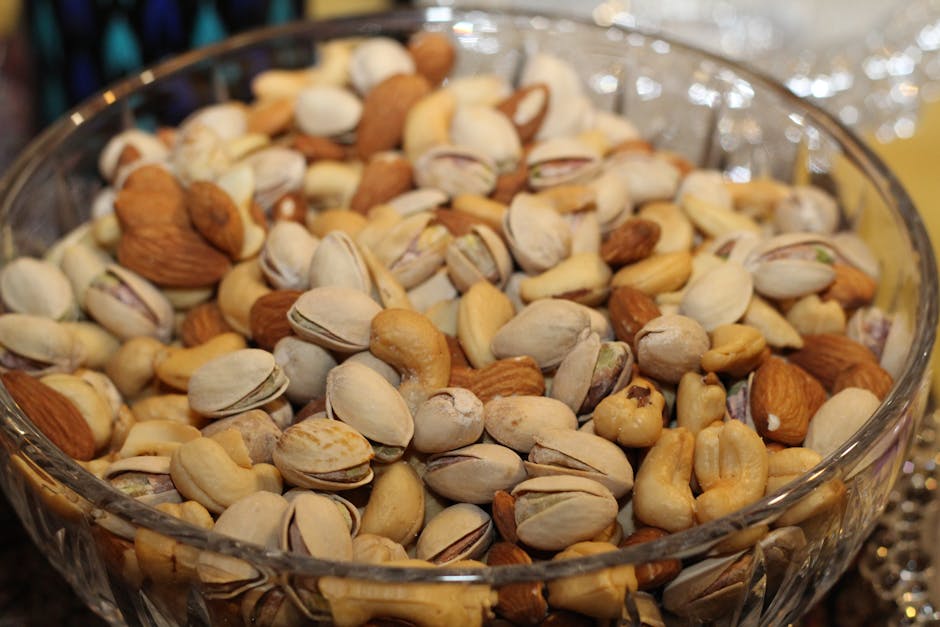
Photo: Pexels / Mehran B
Here's a timing tip many miss: canned sardines or mackerel are just as effective as fresh, far cheaper, and ready in seconds.
And no, omega-3 doesn't 'cancel out' a fried meal—it works best when it's replacing red meat on your plate, not joining it.
3. Nuts: A Small Handful, Not the Whole Jar
✅ Key points
- Nuts improve cholesterol modestly.
- Eat small handful (30g) most days.
- Swap for chips, not an add-on.
Nuts pack healthy unsaturated fats, fiber, and plant compounds that may modestly improve cholesterol when eaten in place of chips or cookies.
The sweet spot is about a small handful—roughly 30 grams, or a quarter-cup—most days.
Photo: Unsplash / Charles Chen

Eat them as a swap, not an add-on, because nuts are calorie-dense and an open jar disappears fast.
A practical trick: pre-portion them into small bags so 'a handful' doesn't quietly become three.
4. Olive Oil and Plant Foods: The Everyday Swap That Adds Up
✅ Key points
- Replace butter with olive oil.
- Unsaturated fats support healthy cholesterol.
- Fill half plate with veggies/fruit.
Replacing butter and other saturated fats with olive oil is one of the simplest moves for your numbers, since unsaturated fats tend to support healthier cholesterol levels.
Extra-virgin olive oil also carries antioxidants that may help your blood vessels.

Photo: Pexels / Yaroslav Shuraev
Use it drizzled over vegetables or as a salad base rather than for high-heat frying, where its delicate compounds break down.
Fill half your plate with colorful vegetables and fruit, and you're stacking fiber and protective plant compounds at the same time.
5. The Sneaky Saboteurs: What to Quietly Pull Back On
✅ Key points
- Cut back on saturated/trans fats.
- Trans fats worst offenders.
- Make them occasional guests.
Even the best foods can't outwork a daily flood of saturated and trans fats—think pastries, processed meats, and fried takeout.
Trans fats (often hiding in 'partially hydrogenated oil') are the worst offenders, nudging bad cholesterol up while pushing good cholesterol down.
Photo: Unsplash / John Vid

You don't have to ban anything forever; just make these occasional guests, not housemates.
Here's what most people miss: cutting back on these often moves your numbers faster than adding 'superfoods' ever will.
When to see a doctor
- Your LDL stays high despite months of diet changes
- Chest tightness, pressure, or pain—especially with effort
- Family history of early heart disease or stroke
- Before starting any cholesterol supplement or stopping prescribed medication
Wrap-up
None of this needs to be perfect or overwhelming.
Pick one swap this week—maybe oatmeal tomorrow, or sardines on toast—and let it become a quiet habit.
Small, steady choices are what actually move the needle over time, and your next blood test may surprise you.
As always, partner with your doctor so your food and any medication pull in the same direction.
✅ Your checklist for today
☐ Swap your breakfast for oatmeal topped with fruit
☐ Add a half-cup of beans to lunch or dinner
☐ Pre-portion one small handful of nuts for a snack
☐ Plan two oily-fish meals this week (canned is fine)
☐ Use olive oil instead of butter at least once today
Frequently asked questions
Q. How long before these foods affect my cholesterol?
A. Most people need a few weeks to a couple of months of consistent eating to see a meaningful change.
Diet alone may lower LDL modestly if your numbers are very high, talk with your doctor, as food and medication often work best together.
Q. Are eggs and shrimp off-limits with high cholesterol?
A. For most people, dietary cholesterol from eggs and shrimp matters less than saturated and trans fats.
Enjoy them in reasonable amounts, but ask your doctor if you have diabetes or a strong heart-disease history, since advice can be more personalized.
Q. Can supplements replace these foods?
A. Whole foods give you fiber, healthy fats, and protective plant compounds together—something a single pill rarely matches.
Fish-oil or fiber supplements may help some people, but check with your doctor first, especially if you take blood thinners.
If this was helpful, please follow and share . Questions? Leave a comment below!
Helpful products
These items may be helpful in daily life; individual results may vary.
Omega 3 fish oil on Amazon › Mixed nuts on Amazon › Olive oil on Amazon ›As an Amazon Associate, I earn from qualifying purchases.
#cholesterol #hearthealth #seniorhealth #solublefiber #omega3 #healthyeating #nutritionafter50 #oilyfish
📚 Trusted sources to learn more
For more, see trusted sources such as the CDC and the Mayo Clinic.
📝 About this article
'ReyB Health Notes' explains trusted public health information in plain language for older adults (50s–70s). (Reviewed June 2026)
This article is general health information and is not a substitute for diagnosis or treatment. If you have symptoms or concerns, please consult a medical professional.
Comments
Post a Comment