Fall Prevention for Seniors: 5 Home and Outdoor Checks for Winter
💡 Key Takeaways
- Over half of senior falls happen at home.
- Clear home hazards, walk like a penguin.
- Build leg strength, review meds, check vision.

For an older adult, a single 'thud' can change everything.
Winter stiffens muscles and joints and adds icy ground, and a fall that breaks a hip can mean long bed rest and a sharp decline in health.
Yet surprisingly, more than half of senior falls happen not outside, but at home.
Here are five non-obvious checks to prevent falls indoors and out.
📑 Contents
1. On ice, walk like a 'penguin'
✅ Key points
- Walk like a 'penguin'.
- Keep hands free on ice.
- Wear non-slip shoes.
On frozen ground, take short steps, plant your whole foot, keep your weight slightly forward, and waddle slowly — the 'penguin walk.'

Photo: Pexels / Quintin Gellar
Walking with both hands in your pockets means you can't catch yourself, so wear gloves and keep hands free.
Choose shoes with non-slip soles, and the more you're rushing, the slower you should move.
Don't carry heavy bags in both hands.
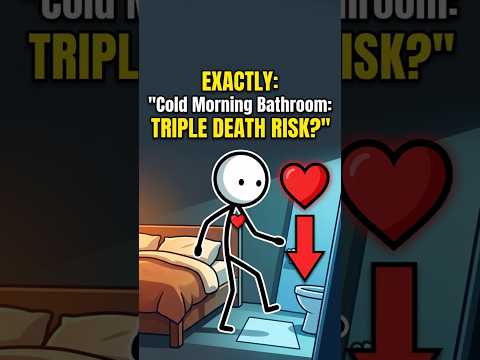
💡 a small night-light along the bedroom-to-bathroom path helps a lot.
2. Half of falls happen 'at home' (clear the tripping hazards)
✅ Key points
- Clear floor hazards.
- Wear non-slip indoor shoes.
- Use night-lights at home.
Surprisingly, more than half of senior falls happen in the familiar home.
Cords, slippery mats, thresholds, and items left on the floor are easy to trip on.

Photo: Pexels / Pavel Danilyuk
Keep your usual paths clear, and wear non-slip indoor shoes instead of slippery socks.
Many falls happen on the dark trip to the bathroom at night, so a small night-light along the bedroom-to-bathroom path helps a lot.
3. Add grab bars in the bathroom
✅ Key points
- Install bathroom grab bars.
- Lay non-slip bath mat.
- Keep soap at hand height.
A wet bathroom is the most slippery spot in the house.
Install grab bars by the toilet and tub, and lay a non-slip mat on the floor.
Wear non-slip bathroom slippers, and keep soap and shampoo at hand height so you don't twist or bend awkwardly.
Small fixes here prevent serious fractures.
4. Build a 'fall-proof body' with leg strength + vitamin D
✅ Key points
- Do leg strength exercises.
- Practice balance daily.
- Check vitamin D levels.
Stronger legs and better balance cut fall risk.
Try chair sit-to-stands and standing on one leg for 10 seconds daily, within a safe range.
Low vitamin D is also linked to weaker muscles and balance and more falls, so get some sun and ask your doctor about supplements if needed.
Stop right away if you feel pain or dizziness, and get guidance if exercise is new to you.
5. Review 'multiple medications', dizziness, and vision too
✅ Key points
- Review all medications.
- Discuss dizziness with doctor.
- Get regular vision checks.
Taking several medicines together (blood pressure, sleep, sedatives) can cause dizziness and raise fall risk.
If you often feel lightheaded standing up, bring your full medication list to your doctor — a change may be needed.
Poorly fitting glasses or cataracts also link directly to falls, so have your vision checked regularly.
When to see a doctor
- After a fall, hip or thigh pain that makes standing or walking hard (possible hip fracture)
- After hitting your head: headache, vomiting, drowsiness, or confusion (call emergency services)
- A swollen, misshapen wrist or arm
- Worsening swelling, bruising, and pain that won't settle
Wrap-up
Fall prevention starts with clearing home hazards, walking like a penguin, and building leg strength.
Walk through your home today and clear cords and thresholds first.
A small check can prevent a major fracture.
✅ Your checklist for today
☐ On ice, penguin walk with hands out of pockets
☐ Clear cords, thresholds, and floor clutter
☐ Add bathroom grab bars and non-slip mats
☐ Daily one-leg stands + vitamin D
☐ Review meds, dizziness, and vision
Frequently asked questions
Q. Aren't icy sidewalks the most dangerous place for falls?
A. Ice is risky, but over half of senior falls happen at home.
Start by checking cords, thresholds, and bathroom wetness indoors.
Q. I fell but can still walk — do I need a doctor?
A. Even if you can walk, a hip or spine bone may be cracked.
If pain lingers or it swells, get it checked for a fracture to be safe.
Q. What exercises help prevent falls?
A. Chair sit-to-stands for leg strength and one-leg stands for balance are classics.
Do a little daily, within a safe range, with something to hold nearby.
If this was helpful, please follow and share . Questions? Leave a comment below!
Helpful products
These items may be helpful in daily life; individual results may vary.
Bathroom grab bar on Amazon › Non slip slippers on Amazon › Shoe ice grips on Amazon ›As an Amazon Associate, I earn from qualifying purchases.
#fallprevention #seniorfalls #wintersafety #hipfracture #balanceexercise #seniorhealth #homesafety #healthyaging
📚 Trusted sources to learn more
For more, see trusted sources such as the CDC (STEADI) and the National Institute on Aging.
📝 About this article
'ReyB Health Notes' explains trusted public health information in plain language for older adults (50s–70s). (Reviewed June 2026)
This article is general health information and is not a substitute for diagnosis or treatment. If you have symptoms or concerns, please consult a medical professional.
Comments
Post a Comment